Why bread goes stale
Full
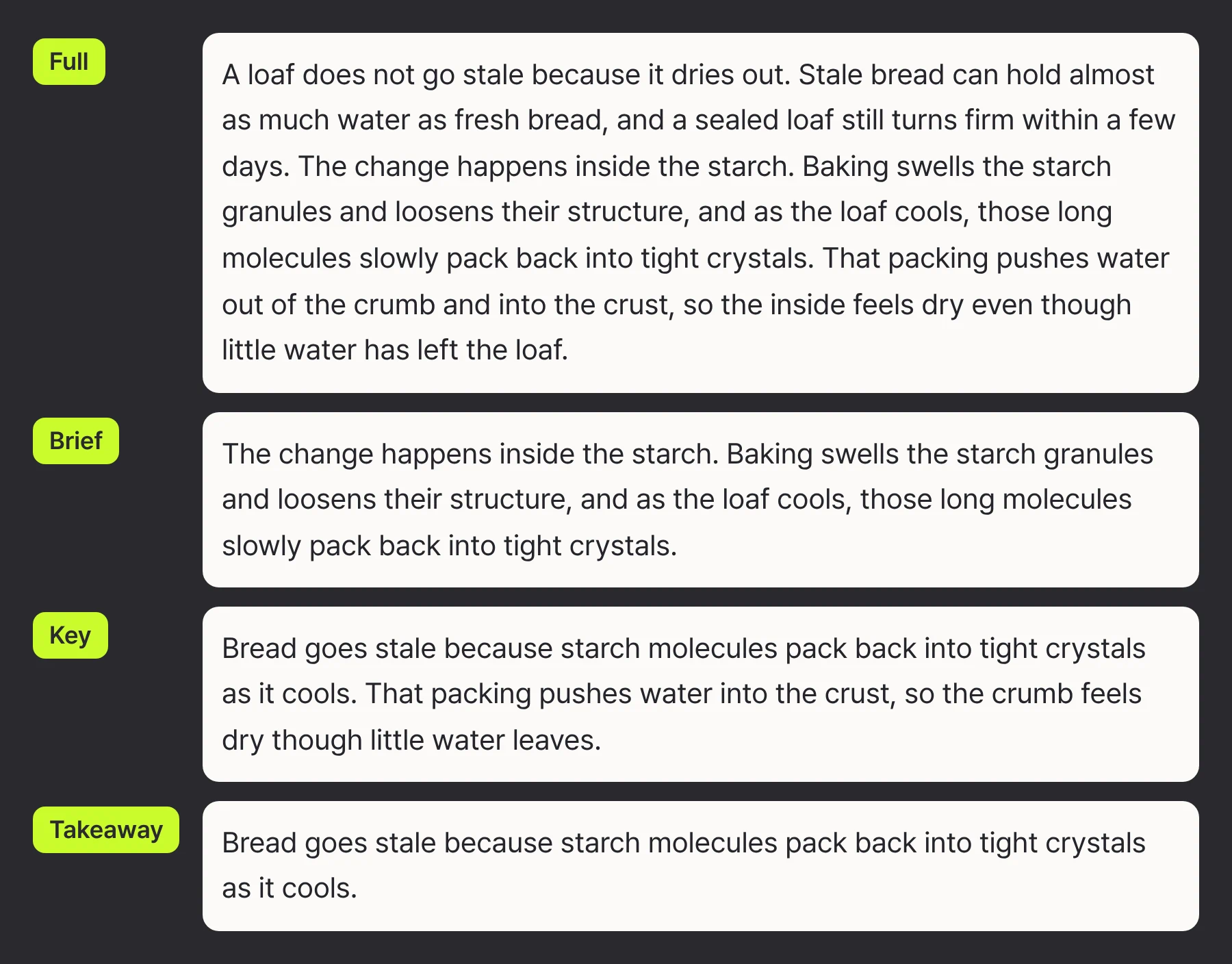
A loaf does not go stale because it dries out. Stale bread can hold almost as much water as fresh bread, and a sealed loaf still turns firm within a few days. The change happens inside the starch. Baking swells the starch granules and loosens their structure, and as the loaf cools, those long molecules slowly pack back into tight crystals. That packing pushes water out of the crumb and into the crust, so the inside feels dry even though little water has left the loaf.
Brief
The change happens inside the starch. Baking swells the starch granules and loosens their structure, and as the loaf cools, those long molecules slowly pack back into tight crystals.
Key
Bread goes stale because starch molecules pack back into tight crystals as it cools. That packing pushes water into the crust, so the crumb feels dry though little water leaves.
Takeaway
Bread goes stale because starch molecules pack back into tight crystals as it cools.
The refrigerator makes this worse. Starch crystallizes fastest just above freezing, so a loaf kept in the fridge can firm up several times faster than one left on the counter. A freezer stops the process almost completely, because the water in the crumb can no longer move. That is why bakers slice what they will not eat today and freeze it, then toast the slices straight from the bag.
Heat reverses the damage for a while. In an oven or a toaster the crystals melt and the crumb turns soft again, which is why a day-old roll can taste fresh after five minutes of warmth. The effect lasts only until the bread cools, when the crystals start to form again. So reheat bread just before you eat it, and do it only once.